
PD. Dr. David Niederseer & Prof. Dr. Andreas Ziegler
The Innovation Drivers
At the Medicine Campus Davos, you’ll find everything that makes the hearts of people like David Niederseer, Head Physician of Cardiology at the Hochgebirgsklinik (HGK) Davos, and Andreas Ziegler, Scientific Director at Cardio-CARE, beat faster: a close integration of excellent research and clinical application, outstanding facilities, access to networks and data, and ample room for innovation.
Here in Davos, the Kühne Foundation consolidates its therapeutic, research, and training expertise in the fields of allergology and cardiovascular diseases. The shared goal of all facilities is to advance the development of new, individualized treatment approaches for the benefit of patients worldwide. The HGK, Cardio-CARE, Davos BioSciences, the Christine Kühne Center for Research and Education in Allergy (CK-CARE), and the Swiss Institute for Allergy and Asthma Research collaborate closely. “A major strength of the campus idea is its integration of diverse disciplines and fields, creating valuable synergies,” emphasizes Andreas Ziegler. “Research findings are, wherever possible, directly translated into medical practice and applied,” adds David Niederseer, who alongside his work as a practicing physician also conducts extensive research at the Medicine Campus Davos.
Currently, David Niederseer and Andreas Ziegler, supported by a 20-member interdisciplinary team, are leading RECOVER, a joint long-term study by HGK, Cardio-CARE, and Davos BioSciences. The colleagues say that studies like RECOVER are an example of the campus’s innovative strength and emphasize what a great privilege it is to be a part of them – projects that are only possible in places like this. “Here, we not only have the scientific resources, but also a sufficient number of patients and, thanks to the Kühne Foundation, the necessary financial means. This makes us a true exception,” says Andreas Ziegler. Both men are very grateful for the trust the foundation places in the team. Not least because, according to David Niederseer, RECOVER has the potential to revolutionize cardiac rehabilitation and steer it in a new direction: “If we succeed in answering currently unanswered questions and ultimately offering each patient the right treatment at the right time, that would be a huge step forward.”
“A major strength of the campus idea is its integration of diverse disciplines and fields, creating valuable synergies.”
Prof. Dr. Andreas Ziegler
Revolution in Cardiac Rehabilitation

Launched in 2025, RECOVER includes a large number of rehabilitation patients in a study to obtain high-quality data from which preventive measures and therapies can be derived. Data from 1,200 cardiac rehabilitation patients will be collected annually until 2035. Cardio-CARE will be responsible for the statistical analysis. The biospecimens are processed by Davos BioSciences and stored in a biobank. Extensive internal and external expertise was incorporated in the study design beforehand. This resulted in questionnaires covering a total of 23 categories, as well as custom software that pseudonymously transfers the participants’ data into the study database. Among other things, the team hopes to close current gaps in cardiological treatment guidelines and refine treatment strategies.
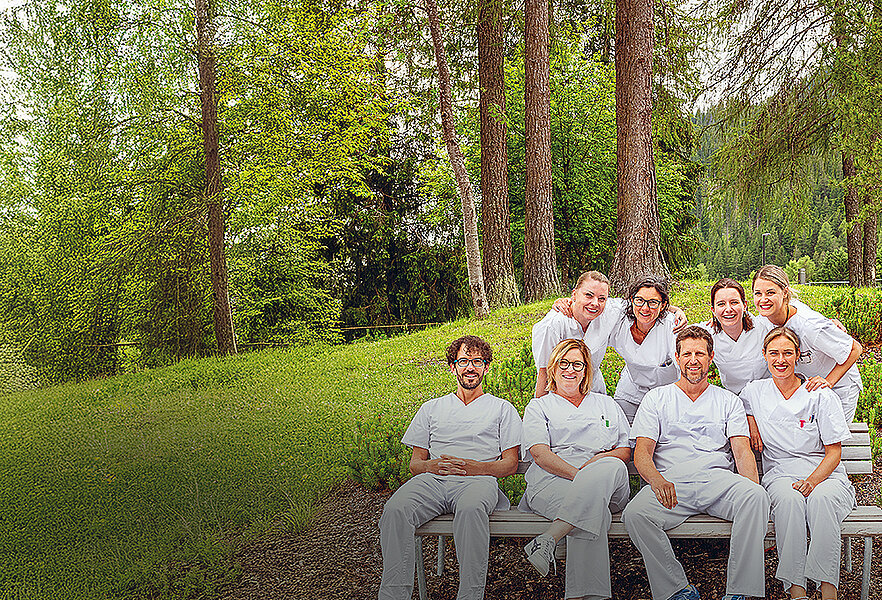
Rahel Schöni
Seynabou Diakhoumpa & Jens Grimm
Tobias Kratzer & Bjarke Ingels