Seynabou Diakhoumpa &
Jens Grimm
Backbone of
Humanitarian Aid
Seynabou Diakhoumpa &
Jens Grimm
Backbone of
Humanitarian Aid
Since the outbreak of the civil war in April 2023, Sudan has been mired in a severe humanitarian crisis. More than ten million people have been forced to flee their homes. Over a million of them have sought refuge in eastern Chad alone. They depend on continuous aid. But getting that aid to them is extremely difficult. A key role is played by the transport corridor from Douala in Cameroon, through N’Djamena, the capital of Chad, to Abéché in the east of the country. HELP Logistics has therefore examined this route in detail to identify ways to make transport more reliable. Seynabou Diakhoumpa, Senior Operations Manager and Supply Chain Advisor at HELP Logistics West Africa, led the study. Together with seven aid organizations, including UNICEF, the team analyzed the conditions along the route.
“Our goal is clear: aid supplies such as medicines and vaccines should arrive exactly where they are needed,” says Jens Grimm, Deputy Representative for Operations at UNICEF Sudan and former Regional Chief of Supply for West and Central Africa. “HELP’s analyses help us to improve supply chains in a targeted way.” For the study, the team combined various approaches: research, on-site visits, interviews with drivers, and the evaluation of transport times and costs. “The focus was always on the specific requirements of the aid organizations and the difficult conditions under which they operate,” said Seynabou Diakhoumpa.
The final report now serves UNICEF and other organizations as a practical guide, for example, when choosing routes or planning according to the seasons. It also shows how alternatives can be effectively weighed. For instance, combining rail and road transport can reduce transport costs by around 40 percent compared to road transport alone, while maintaining similar delivery times. At the same time, reliability increases, especially during the rainy season. For UNICEF and its logistics partners, HELP’s findings facilitate realistic planning. The study clearly demonstrates how crucial functioning logistics are for humanitarian aid. Its results can also be applied to other regions and thus contribute to improving the long-term provision of aid to refugees.
“The focus was always on the specific requirements of the aid organizations and the difficult conditions under which they operate.”
Seynabou Diakhoumpa
The Douala–N’Djamena–Abéché Corridor
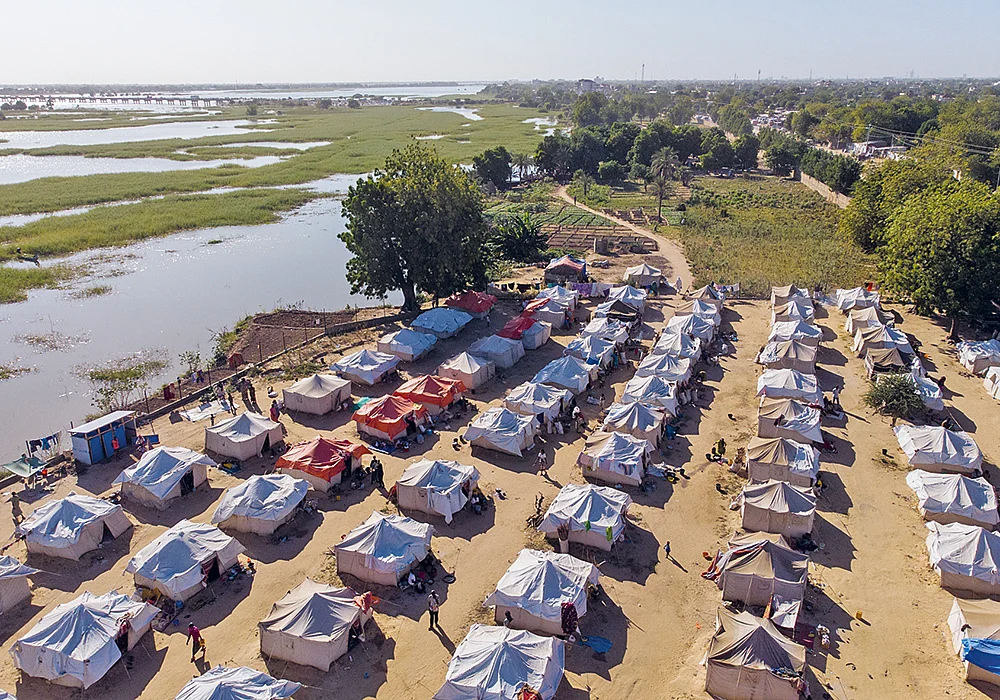
This roughly 2,700-kilometer route runs from Douala in Cameroon via N’Djamena, Chad’s capital, and onward to Abéché in the east. It takes about 20 days to traverse – 12 to 14 days of driving plus 4 to 7 days for border clearance. Along the way, trucks face more than 60 checkpoints, many charging fees, and security risks on certain stretches. With only a few roads paved, conditions worsen in the rainy season, further slowing convoys. Strengthening this corridor is not only a humanitarian priority but an investment in the regional trade infrastructure that communities and economies depend on.

Rahel Schöni

Antonello De Marco

Dr Natalie Arnold, MD, and Cristian Riccio, PhD