
Rahel Schöni
Time for Empathy
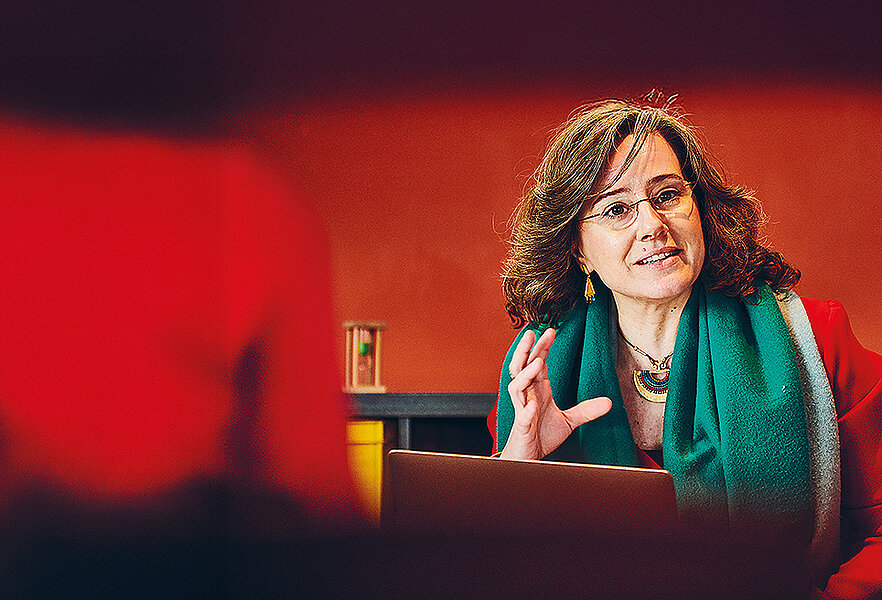
When Rahel Schöni, a trained nurse, joined the cardiology department of the Hochgebirgsklinik (HGK) in Davos in 2021, she had a clear vision: she wanted to be closer to people, and make a difference – which is entirely in line with the Kühne Foundation’s mission. Since 2023, this career changer, who previously worked in an IT company, has led a team of 20 colleagues.
“Most of our rehabilitation patients have undergone heart surgery, for example, due to a heart attack, a heart valve defect, a bypass, or a transplant. Depending on the severity, they spend an average of three weeks with us,” she explains. Therapy focuses on building muscle strength – be it through weight training, running, or cycling. Patients can also access psychological counseling. Many need time to cope with extreme situations like a heart attack. Therefore, empathy is a prerequisite for working as a nurse. “When we notice that someone isn’t doing well, we actively offer them a conversation. Often, patients are afraid or suppress what happened. We address their individual needs, have an eye on them, and take action,” says the team leader, who splits her time equally between office work and patient care. She recalls how the team procured knitting supplies for a patient and how happy this patient was. “Thanks to the pleasant working atmosphere, I can do my job the way I want to,” says Rahel Schöni, who enjoys the unpredictability of her work the most.
Despite the severity of the cases, it’s important to remain professional and keep one’s personal distance. Training sessions, offered twice a month, help with this – for example, on nursing interventions, values, or self-reflection. When patients leave rehabilitation physically and mentally strengthened, many express their gratitude for the nursing team’s dedication with small gestures – such as by baking a cake or, as in the case of the hobby knitter, a multi-page letter. For Rahel Schöni, one thing is clear: here she is making a difference; here she has found her place.
“Most of our rehabilitation patients have undergone heart surgery, for example following a heart attack, a heart valve defect, a bypass or a transplant. Depending on the severity of their condition, they spend an average of three weeks with us.”
Rahel Schöni
Hochgebirgsklinik Davos
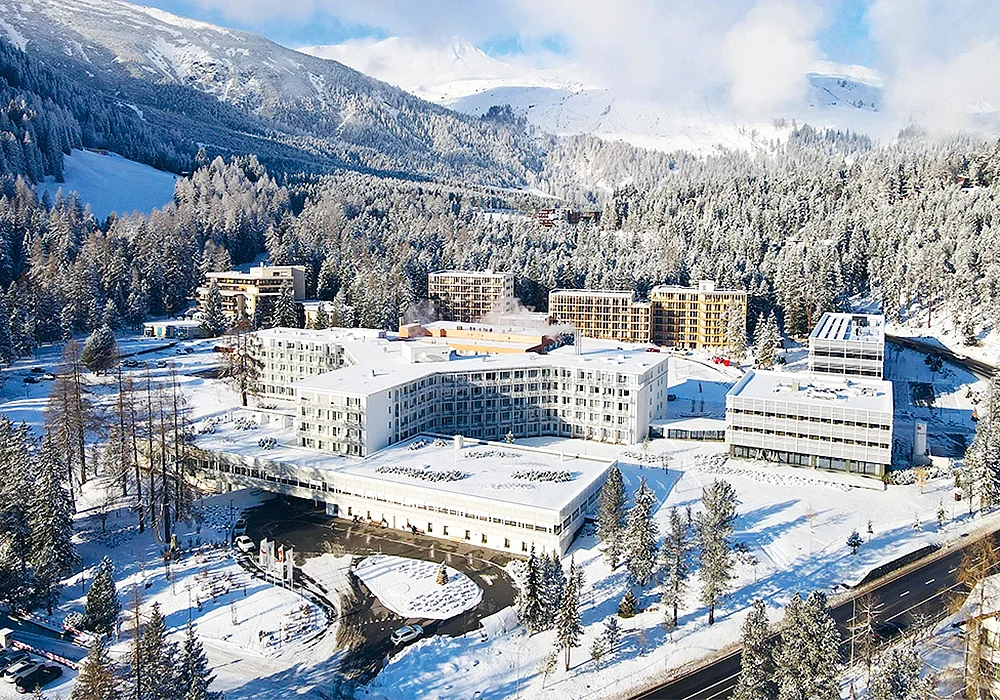
When the Kühne Foundation acquired the Hochgebirgsklinik Davos (HGK) in 2014, it was in a difficult financial situation. Today, it is one of Switzerland’s leading rehabilitation clinics in cardiology, pulmonology, dermatology, allergology, and psychosomatic medicine for adults, adolescents, and children. The clinic is part of the Medicine Campus Davos, and its proximity gives it access to close collaboration in research and education. The interdisciplinary treatments and therapies are tailored to the individual needs of the patients. In 2023 and 2024, the HGK placed second in the joint ranking of the best Swiss rehabilitation clinics.
Maruxa Cardama
Doris Straub Piccirillo & KD Dr Michael Hitzler, MD
Martina Russomanno & Tomislav Jukić