
Dr Mariam Swaleh
A Life Devoted to
Study of the Sea
A key experience shaped Mariam Swaleh’s academic path in chemistry – bachelor, master, and PhD – and everything that followed. That moment came during her undergraduate studies. On a field placement at the Kenya Marine and Fisheries Research Institute, she came face‑to‑face with sewage spilling into the sea. It was the first time she truly felt the reality of ocean pollution. The scale and urgency of the problem were impossible to ignore. “That’s when I became passionate about applying my chemistry knowledge to ocean research,” she says.
Initially, her focus was on using microalgae to treat wastewater. Today, she is at the forefront of marine carbon dioxide removal (mCDR) research and development in Africa. She serves as Assistant Registrar for Research and Grants at the Technical University of Mombasa and as Director of the Ocean–Climate Innovation Hub Kenya, a UN Ocean Decade-endorsed project operating within the Global Ecosystem for Ocean Solutions, a program led by Ocean Visions, where she is an Ocean–Climate Innovation Fellow.
As part of an international research team, Mariam Swaleh is conducting ocean alkalinity enhancement experiments – a promising mCDR approach that may enhance carbon uptake through the increase of ocean alkalinity. The team collects seawater into large containers, adds alkaline material, and closely observes how marine life – particularly phytoplankton – responds. These experiments are now underway at 19 sites worldwide, generating critical insights into how different ocean regions react to such interventions. However, advancing this research along the Kenyan coast comes with significant challenges. Specialized equipment and materials are costly to transport, and without them, the work cannot move forward. The Kühne Foundation stepped in to cover the cost of shipping chemicals, consumables, and other essential materials from Germany to the Kenyan port of Mombasa.
In her view, this support has led to local research capacity building. Beyond logistics, the partnership has opened new doors, leading to invitations for her to speak at high-profile events supported by the Foundation, including the Africa Carbon Removal Summit. That visibility advances another mission close to her heart: inspiring young girls, especially those from Kenya’s coast, to see a future for themselves in science. As she puts it: “I share my work so that someone else can see it’s possible for them too.”
“I came face‑to‑face with sewage spilling into the sea and it was the first time I truly felt the reality of ocean pollution. That’s when I became passionate about applying my chemistry knowledge to ocean research.”
Dr Mariam Swaleh
From Pilot Project to Global Solution
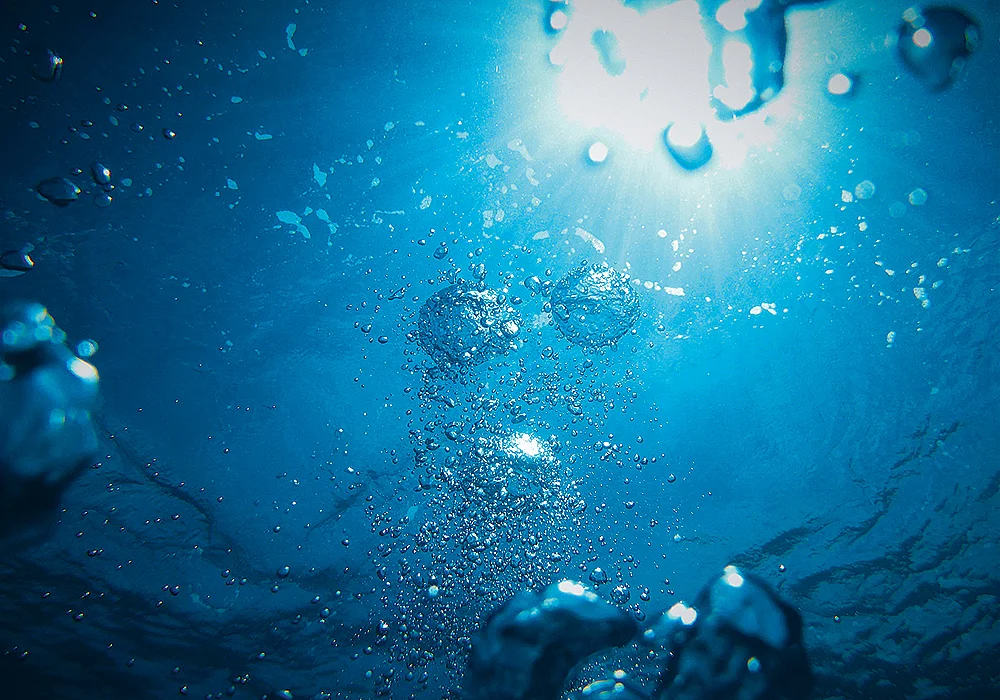
The ocean naturally absorbs CO2. In the framework of the so-called mCDR research, the focus is to explore ways in which oceans can increase that uptake. The Kühne Climate Center contributes its logistics expertise to help develop and scale the technology with the goal of transforming pilot projects into globally relevant solutions.

Tobias Kratzer & Bjarke Ingels
Prof. Dr Arne Heinold
Andrea Bembenek-Jaimes, Amina Djoudad & Steven Roche